


Introduction to Denmark
As most people probably know, Denmark is a small Scandinavian country. In fact, it’s the smallest and most southern Scandinavian country.
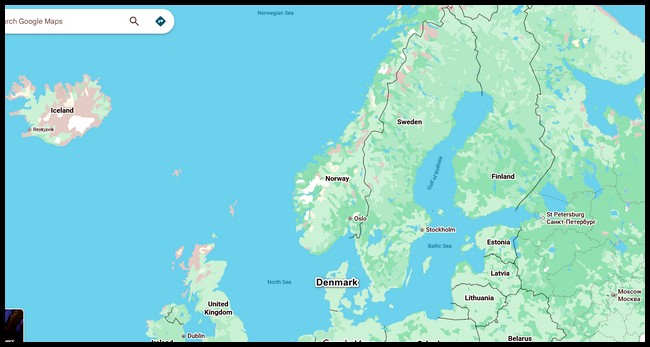
As I discovered by research, there are technically only three Scandinavian countries: Norway, Sweden and Denmark. They share a joint history & close culture and occupy the Scandinavian peninsula. Well, technically, Norway and Sweden occupy the peninsula, while Denmark is practically joined physically.
While Scandinavia includes just three countries, ‘Nordic Countries’ refer to these three plus Finland, Greenland, Iceland and the Faroe Islands.
Geography of Denmark: islands, coastlines and lots of water
In any event, compared to its vastly larger neighbors, Norway and Sweden, which have territories stretching extremely far north, Denmark is pretty tiny. It occupies a total of just 43,000 square kms. Denmark is even small for a European country, comparable in size to nearby Netherlands. For US comparisons, Denmark is about half the size of Maine but twice the size of Vermont.
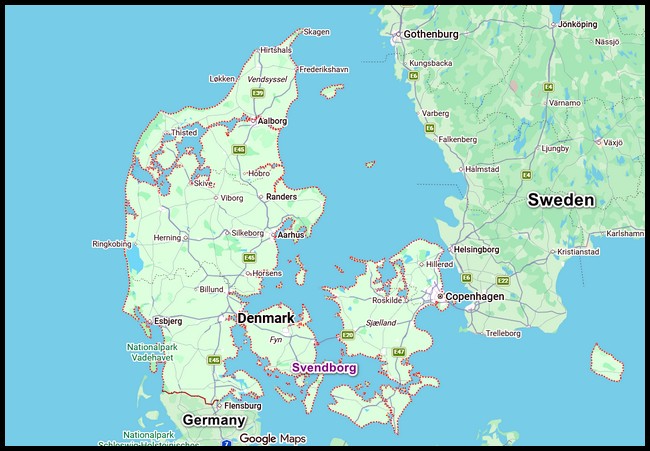
Briefly glancing at Denmark on a map, the country appears to be one block of land. However, it’s actually comprised primarily of islands. In fact, there are more than 400 named islands, 79 of which are inhabited.
If you look more closely at a map of Denmark, you’ll see that the bulk of the country is comprised of its easternmost island, Sjaeland (Zealand), where the capital city, Copenhagen, is situated; plus an equally large central island called Funen (where I am currently, in Svendborg); and the northern end of Jutland Peninsula, which Denmark shares with Germany to the south.
Then there’s a cluster of islands, of all sizes, just south of this main section of the country, and various islands scattered off the long coastlines all over Denmark.
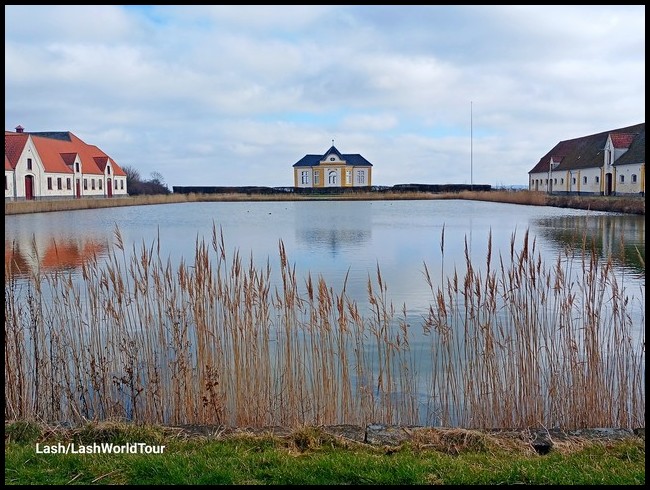
Needless to say, Denmark is surrounded by water. In fact, Germany is Denmark’s only land border, situated on the Jutland Peninsula south of Denmark. Otherwise, Denmark’s borders are seas.
The North Sea lies along Denmark’s west coastline, while the Baltic Sea lies to the east. In between these two major seas, and flowing around Denmark’s many islands, are a series of straits and bays, large and small. Most significantly, the broad Skagerak Strait separates Denmark from Norway to the north, while the equally wide Kattegat Strait separates Denmark from Sweden in the east. These two connected straits connect the Baltic and North Seas.
Besides this complex network of salt water seas, straits, bays and estuaries, Denmark is also dotted by plentiful freshwater lakes, ponds and small rivers. On top of all that, Denmark has a lot of rain, cloudy weather and humidity. In short, Denmark is a nation of water.
Most of Denmark is low-lying and flat or softly undulating land. It’s very fertile, with a lot of agriculture and profuse vegetation. There are beaches, small forests, estuaries and other topographies.
The Kingdom of Denmark also includes in its territories Greenland and the Faroe Islands.
Brief History of Denmark and Scandinavia
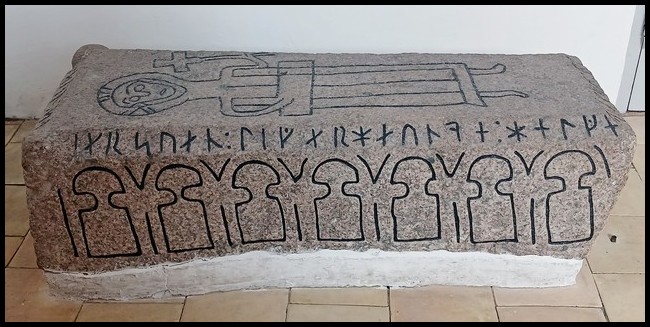
According to my research, human habitation of the region began about 10,000 years BC, at the end of the last great Ice Age, when ice began retreating northward, freeing up land previously under ice. Humans migrated in from southern and eastern Europe. They were hunter/gatherers.
About 3000 BC, people began farming the region, becoming agricultural. Centuries later they began trading with distant European countries, establishing several main trading routes.
Jump way ahead to the late 700s AD, when the Vikings took over the region. Their reign lasted about 200 years, until about 1000 AD.
Starting in 793 AD. The Vikings, who were excellent navigators, ship builders and traders, began a rigorous expansion program. They first expanded into neighboring lands like Netherlands then sailed to Greenland, Iceland and the Faroe Islands, taking over and settling. From there, they invaded England, France and other European countries. Of course, the Vikings practiced their infamous brutal invasions, pillaging and terrorizing as they went.
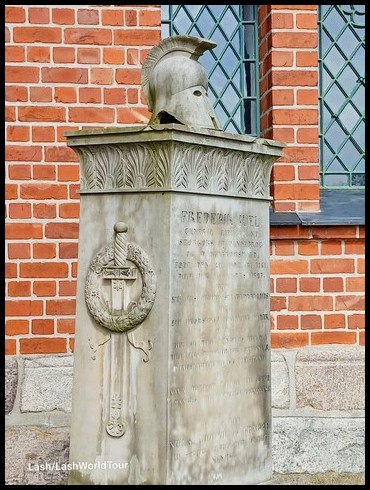
In the early 900s AD, an official Viking Kingdom was established by their first King Gorm the Old. Gorm’s son, Harald Bluetooth, first used the name Denmark for their vast country. King Harald also established Christianity in his kingdom by getting Baptized.
Over the next several centuries there were various battles and rivalries around the Scandinavian region, especially between Denmark, Norway, Sweden and Germany. In 1397, the entire region was finally united as Denmark under the new Queen Margrethe I when she married King Halkan of Norway. What is now Norway, Sweden and Denmark was united as Denmark until 1523.
In 1523, Sweden separated from Denmark. Not until 1814 did Norway split from Denmark, initially joining Sweden. In 1918 Iceland became independent. To this day, Greenland and Faroe Islands are still territories of the Kingdom of Denmark.
Meanwhile, in 1658 the Kingdom of Denmark became a hereditary absolute Monarchy, making it the oldest Monarchy in all of Europe. Over the centuries since, they’ve made many modernizations and changes to the government/political/social structures.
In the early1900s there arose a huge movement towards communal living, with many cooperative farms, and a social welfare system was established. Many communal groups and housing associations are still found throughout Denmark. Danes are also big supporters of free trade, human rights and clean energy.
After WWII, in 1949 Denmark became a founding member of NATO and the UN. They joined EEC (later called EU) in 1972. Today Denmark is a Constitutional Monarchy that’s ruled by a representative Democracy.
People and Culture of Denmark
Denmark has a population of just 6.01 million people (including small populations on Greenland and Faroe Islands). That means the entire country has fewer people that the city of New York, which has 8.3 million residents.
The citizens of Denmark are referred to as Danes or Danish. Generally speaking, they have a very high income, high standard of living, a long life expectancy and a high population density in the Copenhagen region. But there are also many rural, sparsely populated areas throughout the rest of the country.
According to my research, virtually every Dane is a descendant of Vikings.
Like The Netherlands, Denmark has a huge bicycling culture. Designated cycling lanes are found on nearly every road in cities, towns and even through the countryside. There are well-established cycling laws and bicycle parking lots everywhere.
Reportedly, Danes love the concept of ‘cozy’, seen throughout their homes, cafes, restaurants, churches, community centers and elsewhere. They are wine lovers, like most other Europeans. And they tend to be community oriented.
Politically, Denmark is a Socialist Democracy. One way this manifests is in Housing Associations, which are something like communes. They are small housing developments in which every resident communally owns all of the houses, while living privately in one of the homes. They have communal savings, budgets and expenditures to keep up the association.
Denmark is regularly voted as The Happiest Country in the World. I was very excited before arriving to see what the Happiest Country in the World would be like. So I’m quite disappointed to report that I really don’t see that here, though I’ve only been here two weeks, so I don’t want to make a solid conclusion.
However…the Danes are not walking around with big smiles on their faces, acting cheerful or with happy, shining eyes. They’re also not particularly friendly or outgoing, from what I’ve encountered thus far. On the contrary, they’re much more like what I’d expect from a Scandinavian country…cool, reserved and not especially energized. They are much like the people I encountered in Eastern European countries like Georgia, Montenegro and Macedonia, as well as the Chinese.
I’m not saying Danes are unfriendly. When I do strike up a conversation with someone, they speak with me, are friendly enough and are helpful when warranted.
Personally, I find people in cultures like Thailand, Bali, Latin countries and India to at least appear to be happier and friendlier. Countries where people are smiling, joking and laughing in public, behaving in outgoing, gregarious manners seem happy to me. Countries and cultures where people are cool, unsmiling and aloof do not give me the impression of being especially happy.
From what I’ve observed, Danes in general also seem to be quite private and protective of their homes/property (much like Americans) and very law abiding people, sticklers for rules, expecting everyone else to be too, and perhaps rather inflexible. I could well be mistaken on these observations since I’ve only been here two weeks. But my long-time Danish friend agrees with this assessment, for what it’s worth.
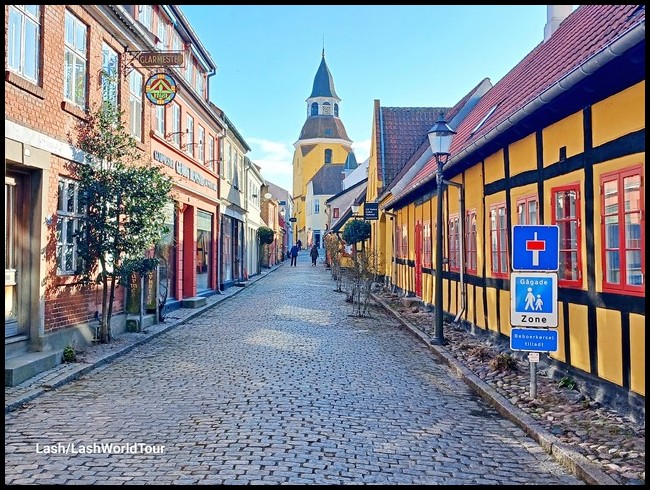
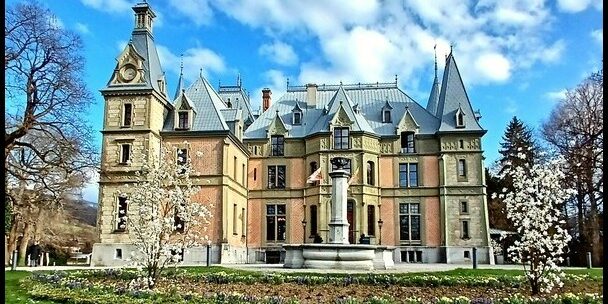
In any event, there’s much to be said on another aspect of Danish culture… such as the stunning historic architecture of Denmark’s countryside homes, traditional towns & villages, churches and castles. In fact, there’s a plethora of diverse historic architecture spread all over the country, including in big cities like Copenhagen, out in the countrysides, and on various islands.
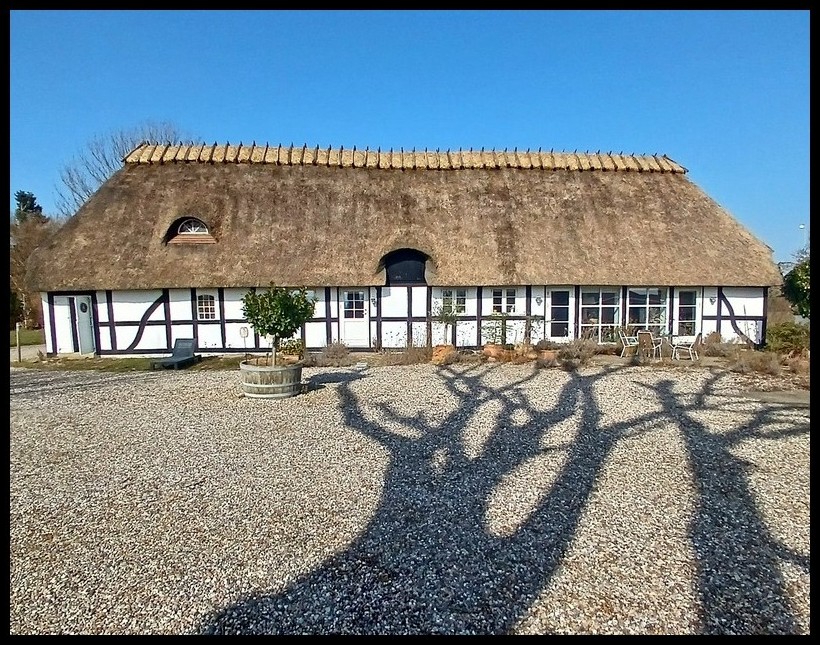
Thus far, I’ve really enjoyed visiting beautiful towns like Svendborg, Faaborg and Toensen, plus seeing so many fantastic rustic country homes with Tudor-like walls and thick thatched roofs. I also got to visit two great Danish castles, thanks to my friend Kevin.
Summary
That’s it for my introduction to Denmark. I’m sure I’ll be making many more observations as I stay here and travel around for another three to four weeks. So stop back for more information and insights on Denmark.
==========================
You might also enjoy:
My 2026 Scandinavia Travel Plans
My Wonderful Three Week Stay in Oxford
==========================


 Hi! I'm Lash, an American nomadic world traveler who's been traveling solo since 1998. I’m passionate about traveling the world nomadically and then sharing it all with you. I hope to inspire you to travel the world, to entertain you with tales from the road, and to help you reach your travel dreams. Welcome!