






There’s something quietly reassuring about the Philippines. Perhaps it’s the way the islands sit scattered across the sea like stepping stones, each one with its own rhythm and softness. Or maybe it’s the water — warm, bright, and surprisingly calm in so many sheltered bays. It’s these qualities, I think, that make so many new divers begin their research by looking into Philippines scuba diving, often before they’ve even chosen which island to land on.
The country has a kind of openness. A gentleness. Even the busier dive spots seem to carry that sense of welcome, as if the sea itself understands that beginners need time, space, and an easy kind of confidence. And while conditions do shift — visibility rises and falls, currents breathe in and out — there’s still something dependable about the Philippines when it comes to learning. The water feels like a good teacher: patient, warm, and rarely intimidating.
Before I ever thought about diving properly, I remember watching an instructor guide a group of first-timers into the water just off a quiet Visayan beach. Their nerves, the slight awkwardness of adjusting masks and checking straps, and then that moment — the one where each person finally dipped beneath the surface. The water was clear that morning, so clear it seemed to brighten the whole mood. And I’ve carried that memory with me ever since, because it still feels like the Philippines at its best: gentle beginnings.
The Philippines and the art of an easy first step
Learning to dive is a strange mixture of excitement and uncertainty. There’s the thrill of breathing underwater for the first time, followed almost immediately by the awareness that you’re doing something completely unfamiliar. Warm water settles some of that unease; calm bays ease the rest.
The Philippines has thousands of those bays. Protected coves. Shallow reef shelves. Wide sandy bottoms where new divers can kneel, practise skills, and simply get used to the weight of the equipment. It’s one of the few places where you genuinely feel the environment working with you rather than against you — and not in a dramatic way, just quietly supportive.
Of course, the science of it all matters too. Tropical temperatures mean fewer layers, less bulk, and less distraction. Coral health increases fish activity, which helps beginners stay engaged and relaxed. And the geography of the islands creates natural barriers that soften currents.
But it’s not simply the conditions. It’s the atmosphere, the sense that diving here is woven into daily life — instructors who’ve been teaching for decades, boats that feel like old friends, mornings that begin slow and patient. You don’t feel rushed. And that, in learning, is everything.
Warm, predictable water: the comfort of immersion
There’s something wonderfully forgiving about warm water. You’re not thinking about the cold creeping in or the sudden shock when you first descend. Instead, you slip under gently, almost naturally. New divers often underestimate how important temperature is — how it shapes mindset, focus, and even breathing patterns.
In the Philippines, surface temperatures hover comfortably throughout most of the year. Even during seasonal shifts, the sea rarely loses that enveloping softness. You might feel a slight thermocline here and there, a ribbon of cooler water drifting past like a passing thought, but nothing that breaks your concentration.
And warmth does something else too: it invites longer dives. Beginners who feel comfortable stay calmer, and people who stay calmer learn faster. It’s a small detail, but an important one, and the Philippines seems to understand this intuitively.
Clear, slow-moving bays: nature’s training rooms
If you were asked to design the perfect beginner dive site, it might look suspiciously like one of the Philippines’ quiet coves. A soft sandy bottom. A house reef just metres from shore. Fish darting back and forth in bright, simple colours. Perhaps a starfish sitting motionless at the edge of a coral patch, offering a gentle anchor point for new eyes.
These bays are small enough to feel contained but wide enough to allow natural exploration — a balance that helps new divers feel safe without feeling confined. You can practise buoyancy in waist-deep water before moving slightly deeper, all within one coherent space.
One of the details I’ve always appreciated, though, is how forgiving the visibility can be. Some days the water opens up beautifully, letting you see the contours of the reef from metres away. Other days it softens, the blue turning slightly hazy. And oddly, both conditions are helpful. Clear days build confidence. Murkier days teach composure. Beginners learn something from each version of the sea.
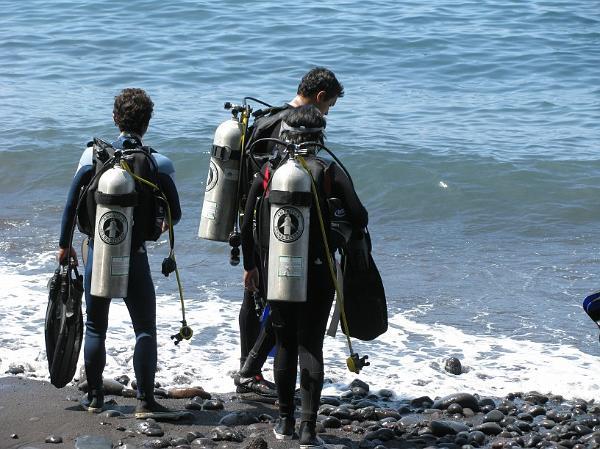
Exceptional instructors and a culture built around diving
Instruction matters — more than people sometimes realise — and the Philippines has a long, well-established community of dive professionals who understand the subtleties of teaching. Not just the mechanics of safety and technique, but the emotional side as well: how to reassure, when to step back, when to explain something twice or let someone take a moment.
You get the sense that many instructors learned to dive young and somehow never left the water. It’s woven into the culture along coastal towns: families running dive shops, siblings working as boat crew, grandparents who’ve spent decades watching the tourism ebb and flow. It gives the learning environment a grounded feeling, something steady beneath the surface of the experience.
And because so many travellers arrive specifically to learn, there’s a natural rhythm to the training. No one is embarrassed to be a beginner here. Everyone remembers that first step — the bubbles, the breath, the slight strangeness of descending for the first time.
A range of experiences without overwhelming complexity
What the Philippines offers, perhaps more than anywhere else in Asia, is variety without pressure. A beginner can choose the simplest, calmest entry-level sites — places where the water almost seems to hold you up — and still be within reach of more adventurous dives once confidence grows.
You might start with:
- Shallow coral gardens where the fish seem unbothered by your slow movements.
- Gentle drop-offs that aren’t intimidating but show the first hints of depth.
- Wide sandy bays perfect for practising buoyancy and fin control.
Then, without travelling far, you can step into something more dramatic:
- small caverns or swim-throughs (only when ready),
- deeper reefs glowing with soft coral,
- or even wrecks, many of which sit at beginner-friendly depths.
The beauty of this progression is that nothing feels rushed. You can linger. Repeat a site. Pause in your learning without feeling you’re interrupting anything. The country’s geography supports curiosity at every level.
Wildlife that keeps beginners engaged and anchored in the moment
New divers sometimes worry that they’ll feel disoriented underwater, unsure where to look or how to settle their attention. The Philippines solves that subtle problem almost effortlessly. There’s simply so much life, so much movement, that your eyes always find something grounding: a clownfish darting between anemone tentacles, a butterflyfish hovering in the shallows, a turtle drifting past just slowly enough for you to track it.
This isn’t an adrenaline environment — not at the beginner level — but a steady, mesmerising one. Fish behaviour fills your senses, coral shapes slow your breathing, and even moments of stillness feel intentional. The wildlife becomes part of your learning, not a distraction from it.
Predictable seasons that support training
While conditions vary, the Philippines generally offers long stretches of reliable diving weather, making it easier for beginners to plan. There are occasional storms, of course, and some regions experience stronger monsoon winds at certain times of year. But the overall predictability — especially around major diving regions — creates confidence.
What helps most is that dive operators here are used to adjusting gently. If currents increase one day, they shift to a sheltered bay. If visibility softens, they choose a shallow garden where the light still filters clearly. It’s less about perfection and more about thoughtful adaptation.
The emotional side of learning: why the Philippines feels different
Learning to dive isn’t only about technique or water conditions. It’s also about how a place makes you feel — the atmosphere before the lesson, the way mornings unfold, the quiet chatter on the boat, the sense of being part of something without quite realising it.
The Philippines has an easy warmth to it, a softness that encourages beginners to relax. You notice it in the way people speak, the unhurried pace, the small kindnesses that seem almost automatic. That emotional comfort matters. It slows you down just enough to absorb everything without tension.
And oddly, this is something the country seems to understand instinctively. Not in a flashy, promotional way — but in the quiet gestures, the steady experience, the sense that diving isn’t an activity here but a conversation between people, islands, and sea.

Why the Philippines remains one of Asia’s best places to begin
If you put all the elements together — warm water, safe bays, experienced instructors, abundant wildlife, gentle progression, and an atmosphere that supports beginners — the answer becomes obvious. The Philippines doesn’t try to impress you. It doesn’t need to. It simply offers the right conditions, one after another, until learning becomes more natural than you expected.
For those taking their first breaths underwater, that combination is rare. And perhaps that’s why so many divers return later, years after their initial course, searching for that same softness, that same sense of welcome.
=============================================



 Hi! I'm Lash, an American nomadic world traveler who's been traveling solo since 1998. I’m passionate about traveling the world nomadically and then sharing it all with you. I hope to inspire you to travel the world, to entertain you with tales from the road, and to help you reach your travel dreams. Welcome!