
The picnic looks simple until everything is laid out by the door: drinking water, lunch, two folding chairs, a blanket and jackets in case the weather changes. The lake is within cycling distance, but the equipment is more than either rider wants to carry in a backpack.
An electric cargo bike is a bicycle designed to carry additional goods or passengers, with a motor that assists the rider. Its carrying structure and electrical system solve different parts of the problem. The frame and cargo equipment support the load; the motor helps move the combined weight of bicycle, rider and belongings.
For outdoor trips, that combination can be useful for transporting supplies to a picnic area, collecting groceries near a campground or carrying camping equipment along a suitable route. Understanding what the bike can do starts with its construction—and with the route the loaded bicycle will actually travel.
What Makes an Electric Bike a Cargo Bike?
Adding a rack to a conventional bicycle gives it somewhere to carry belongings. A cargo bicycle takes carrying loads as a starting requirement. Its frame, wheels, brakes and cargo attachments need to work together within the limits specified for the complete bike and its individual components.
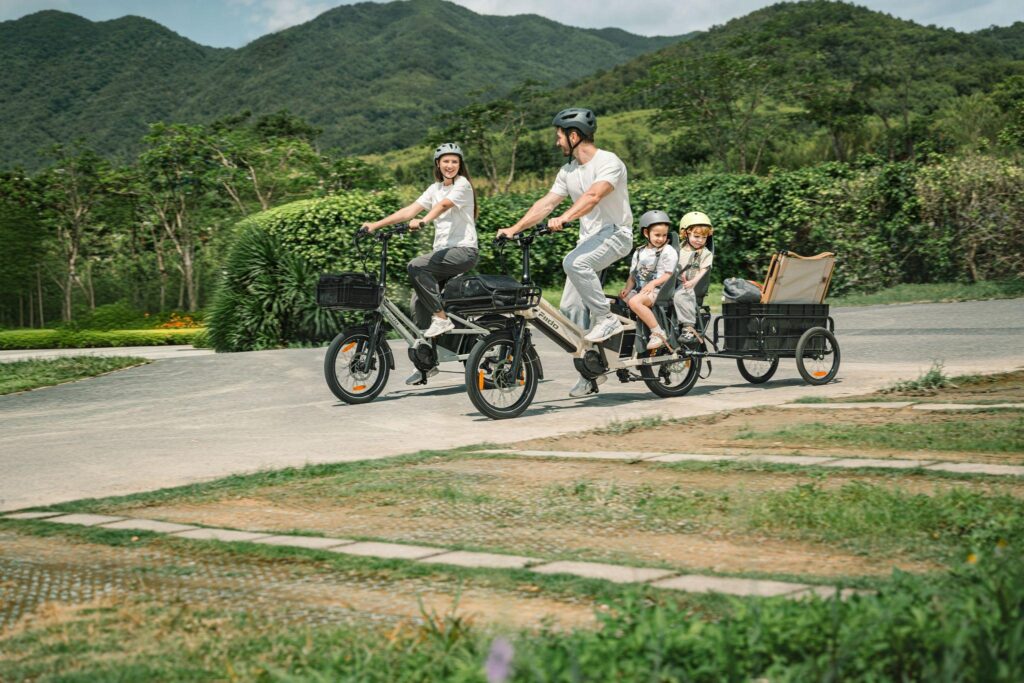
There is no single cargo-bike shape. A longtail extends the rear section to create carrying space behind the rider. A front-loader places a cargo area ahead of the rider, while compact cargo designs keep the overall package shorter. These arrangements affect where belongings sit, how they can be secured and how much room the bicycle needs to turn or park.
Fiido’s electric cargo bike range includes the T2, a longtail model that illustrates the rear-carrying approach. Its extended platform creates space for compatible cargo equipment. For an outdoor outing, the useful question is how that space accommodates the actual bags and supplies you intend to bring.
Weight capacity and usable space are different considerations. A packed folding chair may be relatively light but awkwardly long. Drinking water occupies less space for its weight. Both need secure positions that leave the rider, steering and wheels unobstructed. A generous payload rating cannot tell you whether a particular collection of equipment will fit sensibly.
Passenger transport requires its own approved arrangement. A platform suitable for luggage is not automatically a passenger seat, and a high overall load limit does not establish compatibility with every child seat or accessory. Choose and equip the bicycle for the intended use before combining people and supplies on the same trip.
How the Motor Helps When the Bike Is Loaded
In pedal-assist operation, sensors provide information about the rider’s pedaling, and a controller regulates power delivered from the battery to the motor. Depending on the system, that information may include pedal rotation, pedal force or both. The selected assistance level and control settings influence how the motor responds.
The effect becomes apparent when starting with a load. Accelerating a heavier bicycle requires more force for the same rate of acceleration. Electric assistance contributes to that effort, which can make departures more manageable. It does not remove the mass or take responsibility for balancing and steering the bicycle.
Hills make the relationship clearer. Climbing raises the total mass against gravity, so the rider and motor must supply additional energy. Suitable gearing helps the rider maintain a manageable pedaling rhythm. Increasing the assistance setting and selecting a lower mechanical gear are different actions, even though both may help with the climb.
Motor location also matters. A hub motor drives through a wheel, while a mid-drive motor applies power through the bicycle’s drivetrain. A mid-drive can use the bicycle’s gear ratios, making appropriate shifting relevant to how the motor and rider tackle changing gradients. The precise behavior still depends on the complete system, rather than motor position alone.
The Fiido T3 Max provides a mid-drive example, with a listed 100 Nm motor and nine-speed transmission. These specifications help explain its design, but they do not prove that every loaded climb will be easy. Gradient, gearing, total load, traction and rider input all contribute. Torque figures from different motor layouts should not be treated as a direct ranking of climbing ability.
Where a Cargo E-Bike Fits Into an Outdoor Day
A lakeside picnic is a straightforward starting point. Food, water and clothing can travel in suitable bags, with bulky items secured separately where the bike’s approved equipment allows. Keeping the load on the bicycle can reduce what the rider wears, although it also changes how the bicycle feels when starting, stopping and parking.
Check the destination as carefully as the route. There may be a suitable road to the recreation area but a narrow walking path for the final approach. Plan where to park and how far you will carry the equipment afterward. Loading a bike for a day out is easier when you know what happens at the other end.
A campground supply run presents a different task. The outward journey may be lightly loaded; the return can include food, ice and drinking water. Consider the climb back to camp before shopping, and leave carrying capacity for the purchases. The empty ride into town is not a reliable demonstration of how the loaded return will feel.
For a camping trip by bicycle, a cargo layout can accommodate equipment that is awkward to distribute on a smaller machine. However, bulkier packing can create its own problems at gates, narrow passages and tight turns. Route width and surface conditions matter alongside distance. A loaded longtail may be difficult to maneuver where an unladen conventional bicycle can pass comfortably.
Outdoor use does not automatically mean technical trail riding. Paved routes and suitable, permitted connecting roads may be a better match than steep, rocky paths. Check access with the relevant land manager and stay on routes appropriate to the bicycle and load. Wide tires do not grant trail access or make every surface manageable.
Payload Is More Than the Number on the Product Page
Start by checking how the manufacturer defines payload. Where it includes the rider, belongings and accessories, all of those need to be counted. As a hypothetical example, an 80 kg rider, 25 kg of equipment and 5 kg of accessories total 110 kg, approximately 243 lb. That calculation is only the first check.
Each rack, basket or other carrying component can have a lower limit of its own. Staying below the bicycle’s total allowance does not permit placing the entire load on one rack. Fiido lists the T2 with a total payload of approximately 440 lb and a rear-rack limit of 176 lb, illustrating why the two figures must be read separately.
Follow the loading guidance for the specific bicycle. Secure heavier items in the recommended positions, balance side-mounted bags appropriately and prevent anything from shifting. After packing, check clearances around wheels, brakes, cables and the rider’s feet. A loose strap that looks harmless while parked can reach moving components once riding.
The loading surface matters too. A campsite may offer soft ground or a slope rather than a level parking space. Follow the manufacturer’s support and loading procedure, and do not assume a kickstand will hold an unevenly loaded bicycle in any location. Practice loading at home before trying it with equipment scattered around a campsite.
Braking deserves attention because a heavier moving combination carries more kinetic energy at the same speed. The T2 uses four-piston hydraulic disc brakes, but piston count alone does not establish stopping distance. Pads, rotors, tire grip, system condition and technique all matter. Allow space to slow progressively, especially before turns and descents.
Added weight also affects energy demand, particularly during acceleration and climbing. Battery capacity describes stored energy; range describes how far that energy takes you under particular conditions. Wind, surface, temperature, assistance level and rider effort can all change the result. Leave a practical reserve for the return instead of planning around the maximum advertised distance.
Choose for the Equipment You Actually Carry
Begin a comparison by laying out a representative load. Consider which items are heavy, which are bulky and which need to remain accessible. Then look at compatible carrying equipment, component limits and how easily you can manage the loaded bicycle. This turns an abstract payload figure into a usable arrangement.
The Fiido T2 is worth examining for its longtail layout and carrying options. The T3 Max offers another approach within the category, combining a longtail platform with mid-drive assistance and a dual-battery option. Confirm the battery configuration included in the chosen version; extra capacity brings additional weight and charging requirements as well as more stored energy.
When choosing an ebike for outdoor trips, start with the equipment you need to carry, the surfaces you will ride and the places where you can stop or recharge. Include storage and transport in that decision. A bicycle that suits the ride still needs to fit the arrangements before departure and after returning home.
Practice with the intended load on a short, familiar route before committing to a longer outing. Check starts, controlled stops, low-speed turns and parking, then adjust anything that moves or interferes. The goal is to arrive at the lake with the food, chairs and jackets properly secured—and enough familiarity with the loaded bike to enjoy the ride back.
===============================================